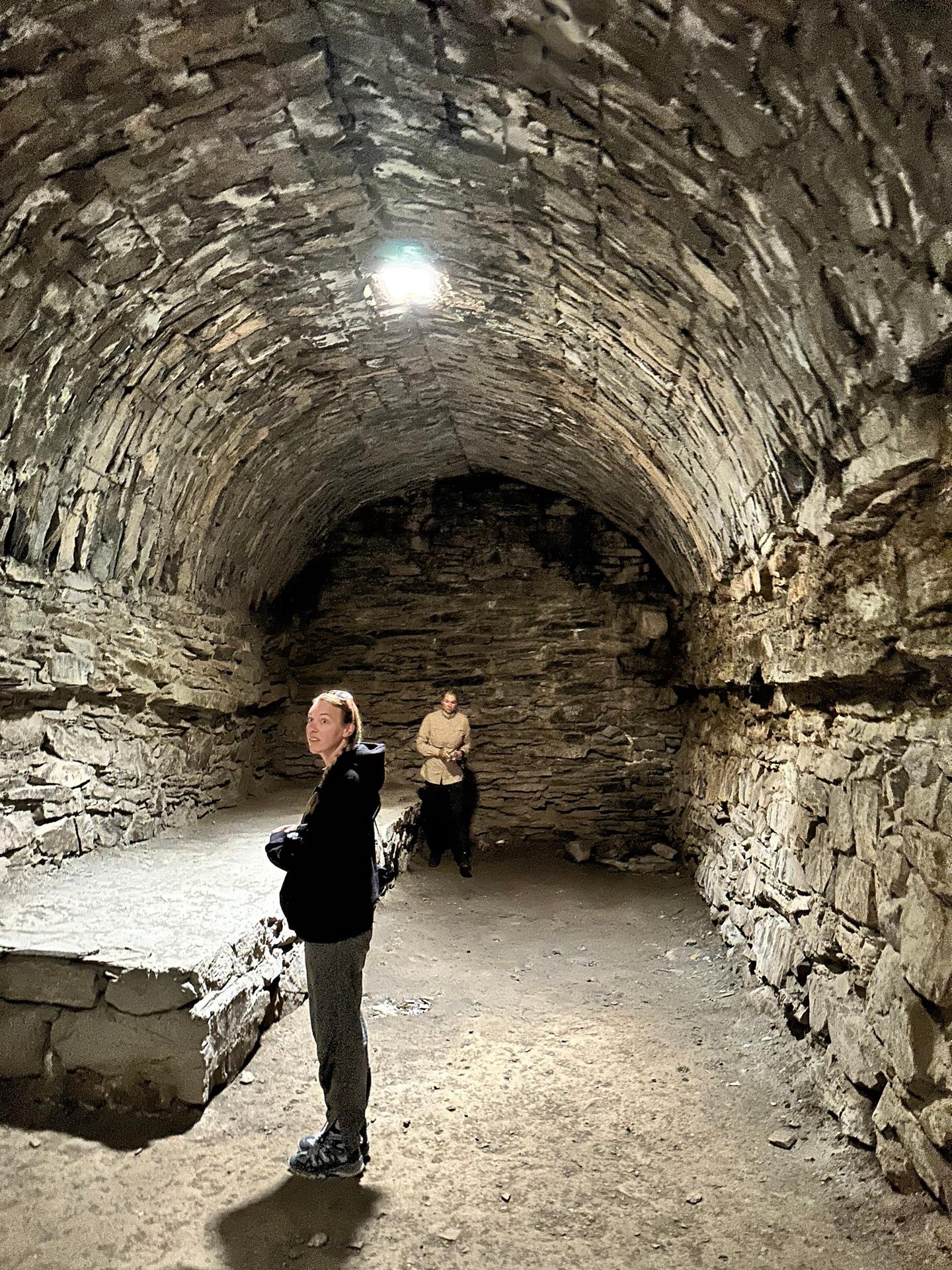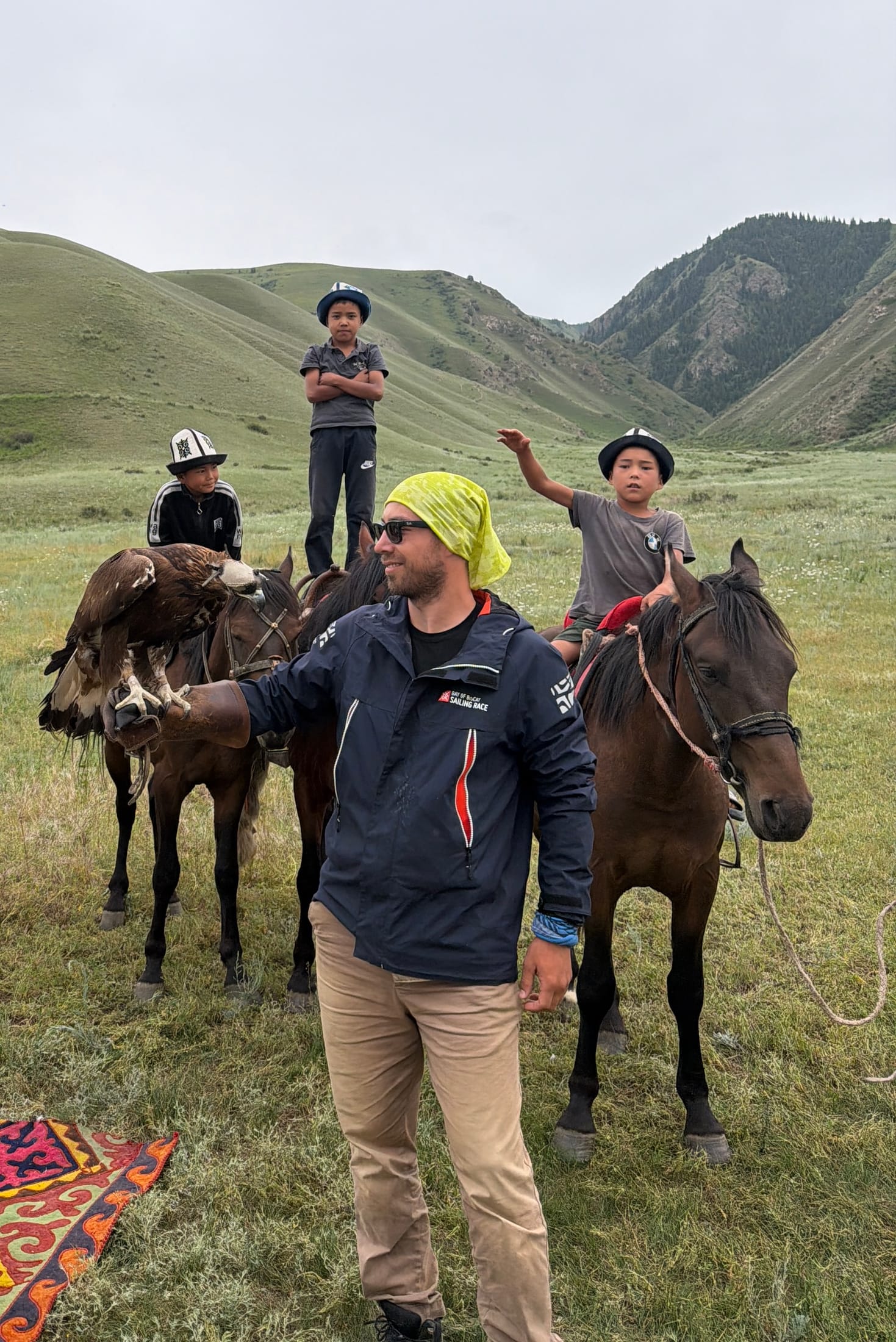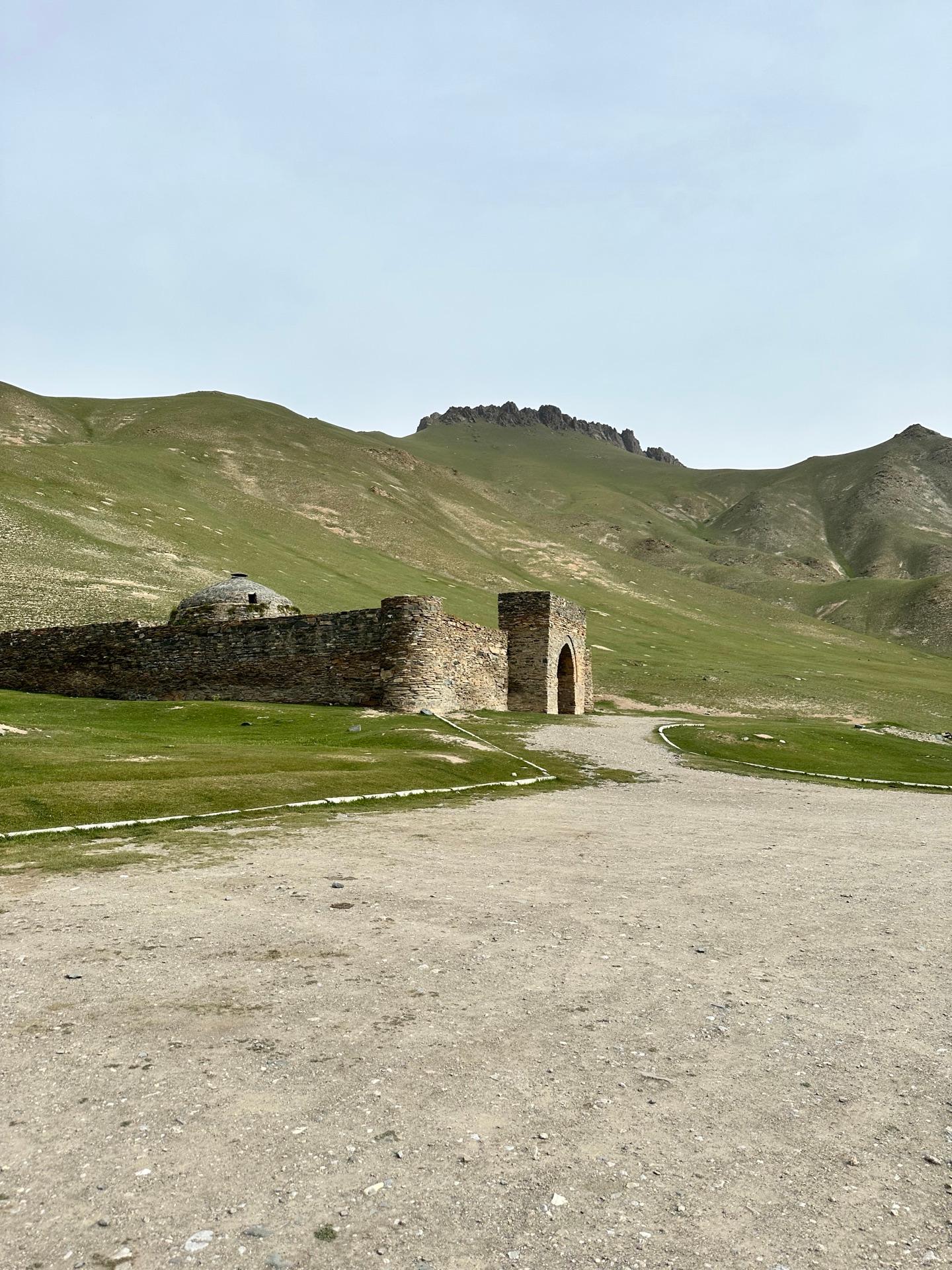
The last part of the trip takes you to Tash Rabat, a stone caravanserai on the old Silk Road. Lunch is served hot at the midday stop. You'll watch an eagle show with a local hunter before a farewell dinner.
Tash Rabat caravanserai: a stone stop on the Silk Road
Tash Rabat is a stone caravanserai in the At-Bashy district of Naryn province, at about 3,200 metres. It sits in a side valley roughly 15 km off the main road and about 110 km south of Naryn town, close to the Chinese border. It is often named among the best-preserved Silk Road buildings.
When it was built is not settled. Most tourism sources give the 15th century, while some researchers think it began much earlier, as a monastery from the 10th century. The debate continues. It was first described to the West in 1859 by the traveller Chokan Valikhanov.
It is the last stop of Atla Yolculuk's 7-day tour. Lunch is served hot at the midday stop, you watch an eagle show with a local hunter and the tour ends with a farewell dinner.
- Altitude
- about 3,200 m
- Location
- At-Bashy district, Naryn province
- Distance from Naryn
- about 110 km south
- Date
- 15th century in most sources (a 10th-century origin is also argued)
- On the tour
- Day 7, eagle show
Where is Tash Rabat?
In Kyrgyzstan's Naryn province, At-Bashy district; about 110 km south of Naryn town, in a side valley near the Chinese border.
How high is Tash Rabat?
About 3,200 metres. Some sources give values between 3,100 and 3,500 metres.
When was Tash Rabat built?
It is not settled. Most tourism sources say the 15th century, while some researchers think it began as a monastery in the 10th century.
Can you visit Tash Rabat on a horse trek?
Yes. The last day of Atla Yolculuk's 7-day tour is at Tash Rabat: lunch, an eagle show and a farewell dinner.
Tash Rabat lies in southern Kyrgyzstan's Naryn region, embedded in the slopes of the At-Bashy mountain range, a stone caravanserai whose construction dates back to the 15th century. It served as a stopover for caravans crossing from China into Central Asia along the Silk Road.
When you walk inside, the temperature drops sharply. Thick stone walls, narrow corridors, small chambers, they wrap around the courtyard where merchants once gathered with their horses and goods. Despite restoration, the structure preserves a large portion of its original stones.
Historians believe the structure began as a Nestorian monastery and was later converted to a caravanserai. Today it's on UNESCO's Tentative List under protection. The valley surrounding Tash Rabat is the summer pastureland for nomadic families during the season.