
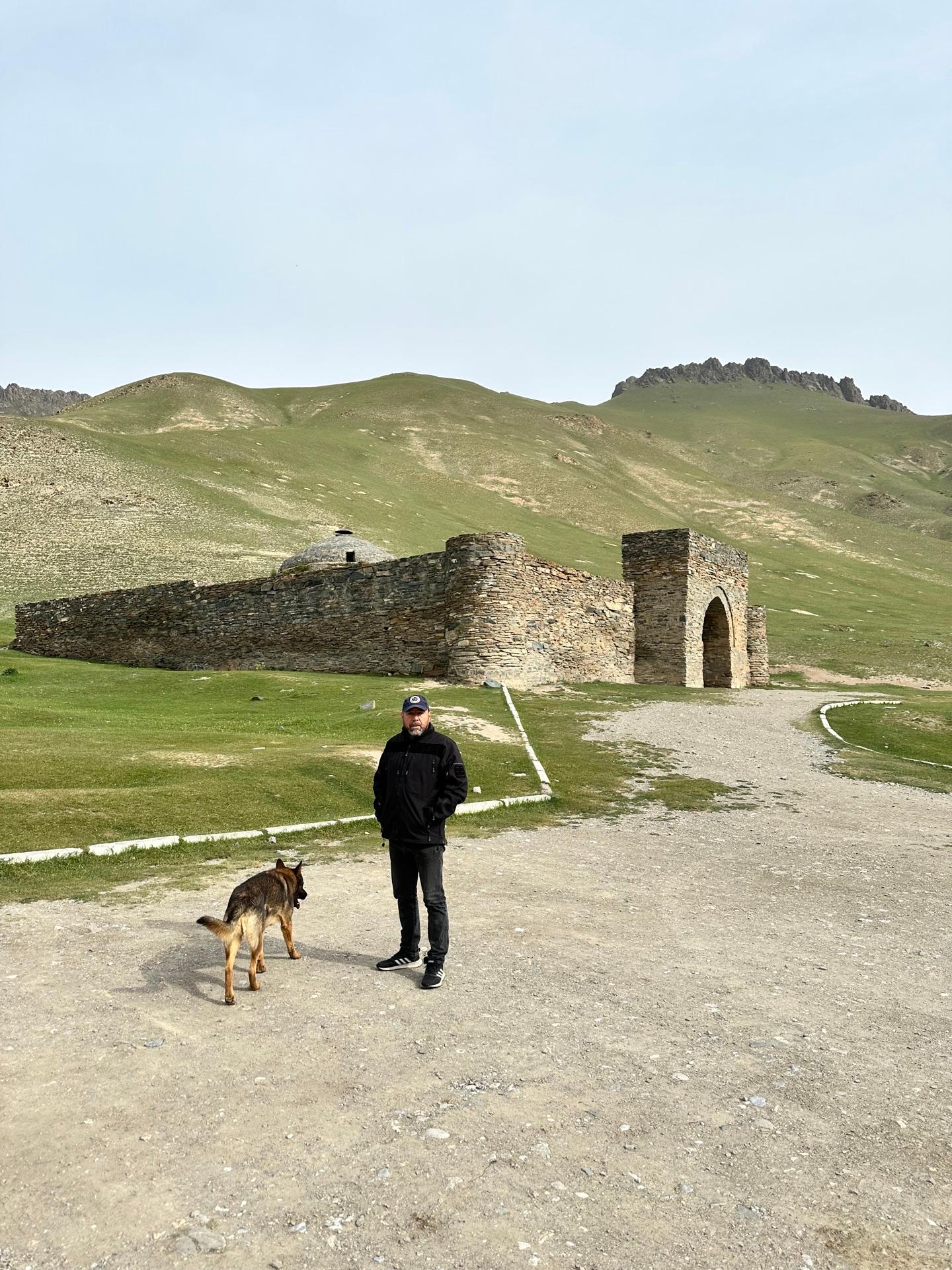
There are places that stop you mid-ride. Where you pull up your horse, look around, and feel the weight of centuries in the silence. Tash Rabat is one of those places.
A Stone Inn on the Silk Road
Built in the 15th century, though some historians date earlier sections to the 10th. Tash Rabat served as a resting point for merchants, pilgrims, and travellers crossing the Tian Shan mountains between China and the West. The name translates simply: tash means stone, rabat means roadside inn.
It sits at 3,200 metres in a narrow valley carved by the Tash Rabat River, accessible only by a dirt track that becomes impassable with snow. For most of the year, the valley sees very few visitors.
The Structure
What makes Tash Rabat unusual among Silk Road caravanserais is how intact it remains. The stone domed building, roughly 35 metres square, contains over 30 rooms radiating from a central hall. The architecture is remarkably sophisticated: thick walls that retain heat, a vaulted ceiling that channels light, and chambers that could serve as sleeping quarters, stables, and storage simultaneously.
Walking through it, you move between light and shadow. The rooms feel both ancient and strangely functional, as if the next caravan might arrive at dusk.
Arriving on Horseback
On our 7-day route, we arrive at Tash Rabat after two days of riding through open steppe and river valleys. The moment the stone structure appears against the valley wall, usually late afternoon, when the light is amber, it tends to silence the group.
We camp nearby and spend the evening exploring the ruins and the surrounding landscape. At night, with no light pollution, the sky above the valley is extraordinary.
Practical Notes
- Tash Rabat is a protected cultural monument. We ask riders to treat the structure with care.
- The surrounding valley is excellent for short walks on rest afternoons.
- Temperatures drop sharply after sunset at 3,200m, bring your warmest layer for the evening.
Tash Rabat is included on our 7-day expedition. It remains one of the places our past riders mention most often when they describe the journey.