
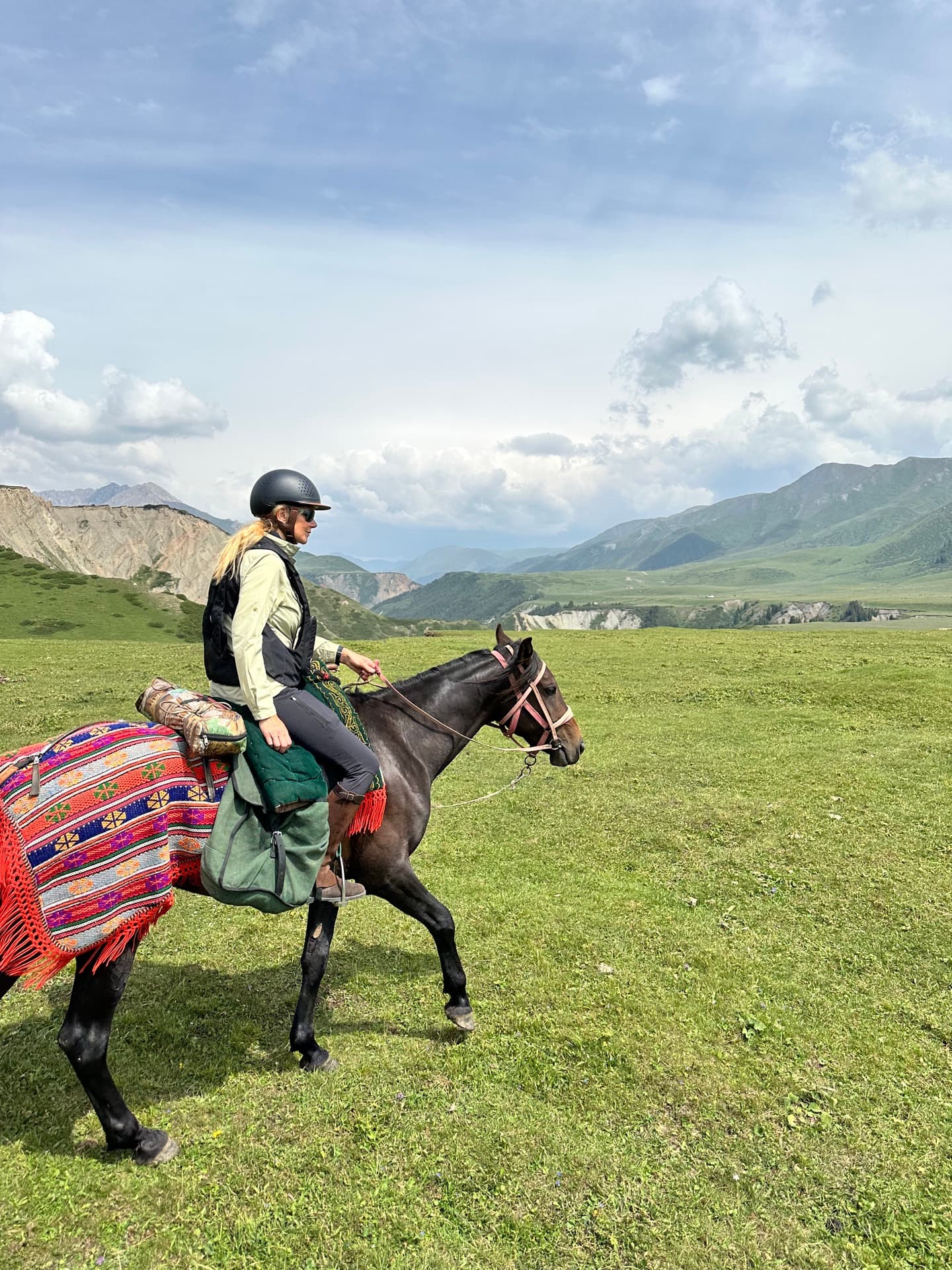
Most first-time riders on our tours have done some riding before, a few lessons, maybe a day ride on holiday. What very few of them have done is sit on a horse for six hours a day, for five or seven days in a row, over mountainous terrain.
The equipment you use for a half-day ride is not the same equipment that will carry you through a week in the Naryn highlands. Here's what actually matters.
What We Provide
Before getting into personal gear, it's worth clarifying what comes with the tour:
- Horse and saddle: Kyrgyz saddle, fitted to your horse before departure
- Helmet: provided and mandatory on all rides
- Local guide: someone who knows the horses, the terrain, and the route
You don't need to bring a saddle or riding helmet. Everything horse-specific is handled by us.
What You Need to Bring
Riding Trousers
This is the most important piece of kit. Full days in the saddle will rub against the inside of your thighs and knees in ways that jeans or hiking trousers absolutely cannot handle.
Recommended: Dedicated riding tights or breeches, the kind worn by endurance riders or trail riders, not show riders. They should be seamless or flat-seamed on the inside leg. Synthetic or merino wool fabrics that move with you.
Avoid: Jeans (thick seams cause blisters within hours), cargo trousers (too much material bunching under the saddle), shorts (obvious reasons at altitude).
Pack: 2–3 pairs minimum for a 7-day tour. You will need to wash them mid-trip.
Boots
Your feet sit in stirrups all day. The boot needs a heel, without it, your foot can slip through the stirrup and get caught. This is not a minor comfort issue. It's a safety requirement.
Recommended: Riding boots (half-chaps or full), or sturdy hiking boots with a clear heel (at least 1.5cm). The sole should be relatively smooth, heavy lug soles can catch in stirrups.
For the Saar Waterfall day: Expect water crossings and wet conditions. Boots that you don't mind getting wet, or a second pair to change into at camp.
Avoid: Trail runners, sandals, flat-soled boots.
Gloves
Holding reins for six hours is different from holding a hiking pole or a barbell. Your hands will tire, and the reins can cause friction burns in windy conditions.
Recommended: Light leather riding gloves, or thin work gloves. Touchscreen-compatible if you want to use your phone without removing them. Fingerless gloves work in warm conditions but leave your fingers exposed on cold mornings.
Pack: At least 2 pairs in case one gets wet.
Base Layers
The altitude swings in Naryn are significant. Morning starts at 2,800m can be 5–10°C. By midday at lower altitude, you may be riding in 25°C sunshine. You will add and remove layers constantly.
Recommended system:
- Merino wool base layer (regulates temperature, doesn't smell after multiple days)
- Mid-layer fleece or down jacket
- Windproof outer shell (not necessarily waterproof, but wind-blocking at altitude makes a significant difference)
For summer (June–August): A lightweight packable down jacket is enough for most people at evening. For May and late August, bring something warmer.
Sun Protection
The UV index at 2,500–3,500m is significantly higher than at sea level. Cloud cover doesn't protect you. You will burn faster than you expect.
- Sunscreen: SPF 50+, applied before departure and reapplied after lunch. Bring enough for daily use.
- Lip balm with SPF: Often forgotten; lips burn badly at altitude
- Sunglasses: Wraparound or close-fitting, the wind at speed on horseback means standard frames are impractical
- Hat or neck gaiter: For the top of the head when the helmet is off at camp
Seat Saver (Optional but Recommended)
If you haven't ridden for extended periods before, a gel seat saver, a padded cover that fits over the saddle, significantly reduces discomfort over long days. It looks slightly awkward. Nobody will care after hour four.
Not everyone uses one; experienced riders often prefer direct contact with the saddle. For beginners, it's worth the pack weight.
What to Keep in Your Day Pack
On each day's ride, you'll carry a small pack accessible from the saddle:
- Water: Minimum 2 litres per person per day. More on Saar day.
- Snacks: High-energy, not perishable, nuts, dried fruit, chocolate
- Rain layer: The weather changes quickly in the highlands
- Small first aid kit: Blister patches are the most-used item
- Sunscreen and lip balm
- Phone/camera: but note that signal is patchy in most riding areas
Blister Prevention
Riders who do everything right can still end up with saddle sores by Day 3. A few things that help:
- Chamois cream: Applied to the inner thigh before long days. Used by cyclists and endurance riders for the same reasons.
- Daily inspection: Check for pressure points at the end of each day, before they develop into something worse
- Ride within your capacity: If you're struggling, say so. The pace can be adjusted.
A Note on Weight
You won't be carrying your main luggage on horseback, it goes in the vehicle that meets you at camp each day. Your day pack only carries what you need during the ride. Keep it under 5kg; lighter is better. The horse carries enough already.