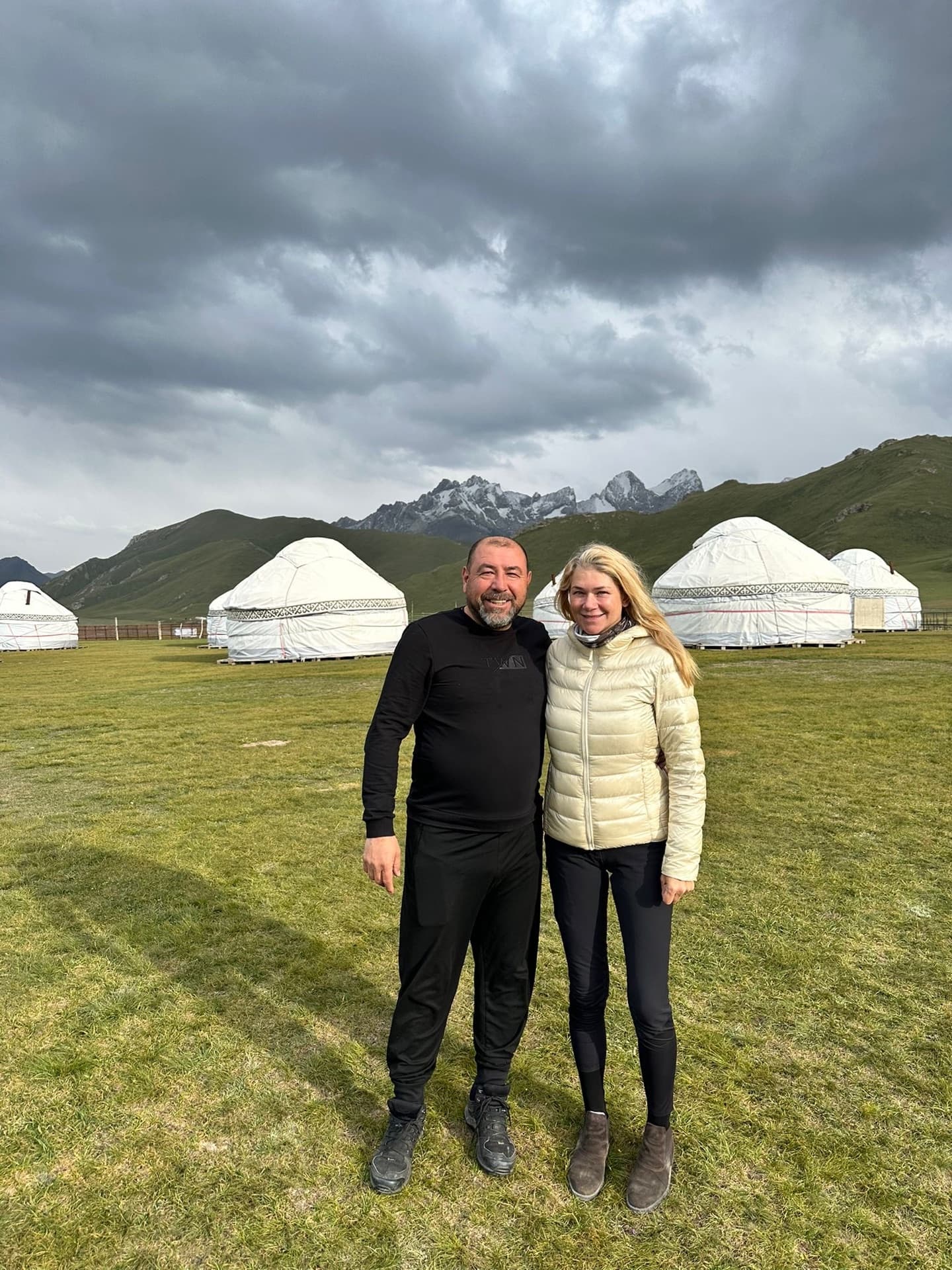
People often ask what a day on the expedition actually looks like. Not the highlights reel — the actual shape of a day. Here's an honest account.
6:30 — First Light
The horses know before you do. You hear them shifting outside the yurt or tent before the light comes through. At 3,000 metres, the air at dawn is sharp enough to pull you properly awake. No alarm needed.
Our team has tea and bread ready by the time most riders emerge. Boiled eggs, jam, hard cheese. Simple food that you will find yourself looking forward to every morning.
7:30 — Saddling Up
Saddling takes time. Girths checked and rechecked. Saddlebags loaded, weight distributed. Our team briefs the day: how far, what terrain, where we stop for lunch. Any concerns about yesterday's riding — a stiff knee, a horse that felt skittish — get addressed here.
No one is rushed. The horses set the pace.
8:00 — Moving
The first hour on the trail is often the best of the day. The light is low and golden, long shadows across the steppe. The horses are fresh. Conversation is minimal — most riders settle into the rhythm quietly.
We cover 25–35 kilometres a day, at a walking and trotting pace. Gallops happen when the terrain allows and the rider wants — open flat ground, wide valleys, no loose stone underfoot. You'll know the moment when it comes.
12:30 — Lunch
We stop near a river or stream when we can. Horses get water and a rest on the lead. Riders get cheese, flatbread, dried fruit, chocolate. Someone usually falls asleep in the grass for twenty minutes. This is encouraged.
14:00 — Afternoon Riding
The afternoon is different in character. The sun is higher, the landscape more familiar, the horses more settled. This is when the riding itself becomes meditative — hours of movement across a landscape that looks the same and is always changing.
Some afternoons bring weather. The clouds build fast over the Tian Shan. A rain jacket goes on in under a minute if you've packed it well.
17:30 — Camp
Arriving at camp is a ritual. Horses unsaddled and hobbled to graze. Gear down. Boots off. If there's a river, some riders wade in regardless of temperature.
Our team sets up camp while you rest. On yurt nights, the families we stay with usually have fresh kurt (dried yoghurt) and sometimes kumys waiting. On wild camping nights, dinner is cooked on a gas stove — soups, rice, sometimes fresh bread baked in a pan.
20:00 — Evening
At altitude with no light pollution, the sky after dark is genuinely disorienting. The Milky Way is a physical presence, not a faint smear. Riders who've only ever seen city skies tend to go quiet.
Conversation around the fire covers a lot of ground. Where people are from. Why they came. What they expected and what they found. By 21:30, most riders are ready for sleep without persuasion.
What People Don't Expect
The physical side is manageable for most reasonably fit people — it's the mental adjustment that takes a day or two. No signal. No schedule beyond the day's ride. Decisions reduced to: saddle up, follow the valley, trust the horses.
By day three, almost everyone stops checking whether their phone has signal.
Our expeditions run in May through August 2026, with groups limited to 6 riders. If this rhythm sounds like yours, the booking details are below.